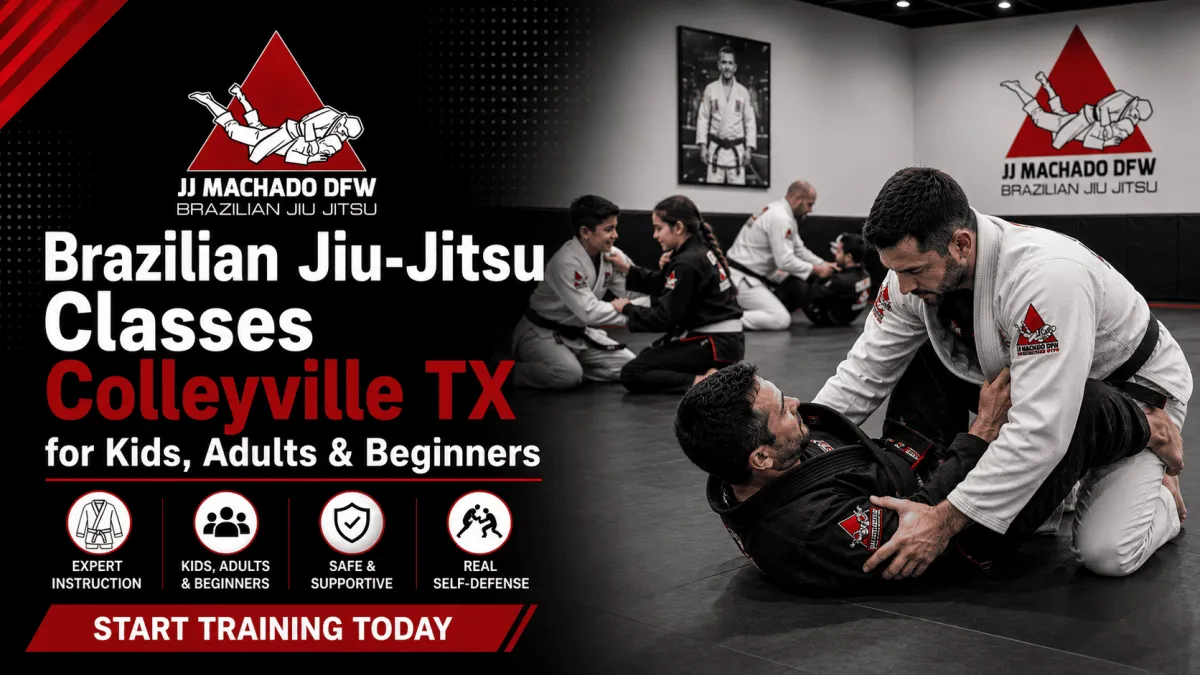
Brazilian Jiu-Jitsu Classes Colleyville TX for Kids, Adults & Beginners
Choosing a Brazilian Jiu-Jitsu class is not only about finding the nearest academy or selecting the first available time on the schedule. The right class should match the student’s age, current experience, training goals, preferred format, and ability to attend consistently.
A three-year-old child, a teenager, a complete adult beginner, and an experienced grappler should not all follow the same class structure. Each student requires instruction and training expectations that fit their current stage.
This guide explains how to choose a BJJ class in Colleyville without feeling overwhelmed by the different age levels, Gi and No-Gi formats, beginner options, and weekly schedules.
The objective is not to choose the most advanced or physically demanding class. It is to find the class that gives you or your child the best opportunity to learn safely, attend consistently, and make gradual progress.
1. Start With the Student’s Age
Age is the first consideration when selecting a Brazilian Jiu-Jitsu class for a child or teenager.
Young students have different attention spans, coordination levels, communication skills, and physical development. For this reason, a responsible youth program should not place every child into one broad class.
JJ Machado DFW currently organizes its youth program into four age-based levels:
Little Samurai: Ages 3–5
Level 1: Ages 5–8
Level 2: Ages 8–12
Level 3 Teen: Ages 13+
These levels are listed on the academy’s official programs and Colleyville pages.
Little Samurai: Ages 3–5
For children ages three to five, the appropriate class should provide a simple and engaging introduction to structured movement.
At this stage, children are beginning to learn how to follow group instructions, wait for their turn, move safely around other students, and respond to a coach.
Parents should not expect a class for this age group to resemble an adult Brazilian Jiu-Jitsu session. The learning process may include basic movement, balance, coordination, listening activities, and simple partner exercises presented in an age-appropriate way.
The goal is to help the child become comfortable with the academic environment while developing the habits needed for future instruction.
Level 1: Ages 5–8
Children between five and eight can generally follow more detailed directions and practice simple movements with a partner.
The correct class should remain engaging, but students can begin learning more about position, control, movement, and responsible partner training.
At this age, parents should look for a class that balances activity with structure. The child should have opportunities to move and participate while also learning when to stop, listen, and follow instructions.
Level 2: Ages 8–12
Students between eight and twelve may be ready for more technical instruction.
They can begin understanding why a movement works, how one position connects to another, and how balance or body placement affects a technique.
Classes may include more detailed drilling and controlled resistance, but safety and responsible partner behavior should remain central to the program.
The most suitable class is not always determined by age alone. The coaching team may also consider the child’s physical development, previous experience, maturity, and comfort level.
Level 3 Teen: Ages 13 and Older
Teen students generally require a class that recognizes they are no longer young children but may not yet be ready for every aspect of an adult training environment.
A teen program can provide more detailed technical instruction while maintaining age-appropriate expectations.
Teenagers may join for fitness, confidence, personal development, competition, or simply because they want a challenging activity outside school. The right class should allow them to progress without being treated exactly like younger children or experienced adults.
2. Consider the Student’s Current Experience
After age, the next factor is experience.
A complete beginner should not choose a class based on how advanced or intense it appears. The priority should be finding an environment where fundamental movements, positions, safety rules, and training habits are explained clearly.
New students may initially need help understanding:
How the class is organized
How to practice with a partner
When and how to tap
How much resistance to use
Basic BJJ terminology
Common positions
Academy hygiene and safety rules
A beginner-friendly class should not assume that the student already understands these details.
More experienced students may need a class that provides stronger resistance, greater technical depth, or training partners with similar experience. However, experienced students should still speak with the coaching team before deciding which session fits them best.
Returning students should also explain how long they have been away from training. A student returning after several years may benefit from restarting gradually rather than immediately following their previous training intensity.
For a detailed explanation of what happens before and during an introductory session, read the guide to a first BJJ class in Colleyville.
3. Identify Your Main Training Goal
People begin Brazilian Jiu-Jitsu for different reasons. Understanding your primary goal can help you choose an appropriate class without expecting one program to provide everything immediately.
Learning a New Skill
Some students want a physical activity that also requires technical learning and problem-solving.
For these students, a beginner class with clear instruction and regular drilling may be more important than choosing the fastest or most physically demanding session.
Becoming More Active
Brazilian Jiu-Jitsu can involve substantial physical movement, but beginners should not treat every session as a maximum-intensity fitness test.
A class that allows gradual progression may be more sustainable than one that leaves a new student unable to recover before the next session.
Fitness can develop alongside technical ability, but the student should still focus on learning how to move safely and efficiently.
Building a Consistent Routine
Some students are not looking for competition or rapid advancement. Their main objective is finding an activity they can attend every week.
For these students, schedule compatibility may matter more than the difference between Gi and No-Gi.
A class that fits your work and family responsibilities is usually more useful than an ideal class you can rarely attend.
Supporting a Child’s Development
Parents may be interested in BJJ because they want their child to participate in a structured activity.
The best class should match the child’s age and allow them to practice listening, controlled movement, patience, and cooperation.
Parents should avoid choosing a class based only on promises about confidence, discipline, or self-defense. The quality of the experience depends on coaching, consistency, class placement, and how the individual child responds.
The full parents’ guide to kids Brazilian Jiu-Jitsu in Colleyville explains what families should expect from youth training.
Preparing for Competition
Competition may appeal to some students, but it should not be treated as a requirement for everyone.
JJ Machado DFW operates an active youth competition team and encourages interested students to compete, but participation is not mandatory.
Students who are interested in competition should speak with the instructor about readiness, training frequency, rules, and expectations instead of choosing a class based only on the word “competition.”
4. Decide Between Gi and No-Gi Training
Adult students may see both Gi and No-Gi sessions on the schedule and wonder which format they should choose.
Both are forms of Brazilian Jiu-Jitsu, but the clothing and available grips affect how students control movement.
What Is Gi Jiu-Jitsu?
Gi training uses a traditional uniform consisting of a jacket, pants, and belt.
Students can use the material of the uniform to establish grips. This creates additional opportunities to study posture, control, timing, pressure, and grip management.
Gi training can feel slower in some positions because the clothing provides additional ways to control a training partner. However, the large number of possible grips may initially feel complicated to a beginner.
New students are not expected to understand every grip. They can begin by learning basic positions and a small number of reliable movements.
What Is No-Gi Jiu-Jitsu?
No-Gi students normally train in fitted athletic clothing rather than a traditional Gi.
Without the same clothing grips, students rely more on body positioning, movement, underhooks, head position, and control of the arms or legs.
Some No-Gi exchanges can feel faster, but beginner instruction should still emphasize control and technical understanding rather than speed alone.
JJ Machado DFW lists both Adult Gi and Adult No-Gi programs. Students should check which sessions are available at the Colleyville location on their preferred training days.
Should Beginners Choose Gi or No-Gi?
There is no single answer that fits every beginner.
Some new students prefer Gi because the additional grips may slow certain positions and make control easier to understand. Others prefer No-Gi because the clothing feels closer to familiar athletic wear.
The weekly schedule may also influence the decision. A student who can consistently attend a No-Gi session may gain more from that routine than from choosing Gi but rarely being available for the class.
Beginners can also experience both formats over time. The first decision does not need to become a permanent limitation.
Contact the academy before attending to confirm whether the class is Gi or No-Gi and what clothing is required.
5. Choose a Class With a Suitable Learning Pace
A class can match your age and preferred format but still move at a pace that does not suit your current experience.
A beginner needs enough time to watch the instructor, ask questions, practice the movement, and receive corrections. This does not mean every class must be slow, but the student should understand the purpose of the drill and the required safety rules.
During an introductory visit, notice whether you can follow the main steps of the class.
You do not need to remember every detail. However, you should feel able to ask questions and receive guidance when you become confused.
Parents should observe whether instructions are delivered in a way that fits the child’s age. Younger children may require shorter explanations and more movement, while teens can usually follow more detailed technical instructions.
The right pace should challenge the student without making every session feel impossible to understand.
6. Review the Schedule Before Choosing
The best class on paper may not be the best class for your actual weekly routine.
Before deciding, review:
Work or school hours
Travel time to the academy
Family responsibilities
Recovery between sessions
Other activities
How often the class is offered
Whether the schedule is likely to remain manageable
New students often feel excited and choose more sessions than they can realistically maintain.
A smaller, consistent schedule is generally more useful than attending several classes during the first week and then stopping for a month.
The official Colleyville BJJ class schedule includes current youth, teen, Adult Gi, and No-Gi class information. New students are advised to contact the academy before attending so the team can confirm the schedule and recommend a suitable session.
Class times may also change because of holidays, events, competitions, or seminars. Confirm the session before the first visit rather than relying on an old screenshot or social media post.
7. Evaluate the Class After Attending
You do not need to decide whether a class is perfect before experiencing it.
An introductory class can help you understand the coaching style, pace, class structure, and level of physical contact.
After the session, consider the following questions:
Did the instructor know that you were a beginner?
Were the safety rules explained?
Could you ask questions?
Did your training partner use controlled resistance?
Did the class match your age or experience?
Did you understand what you were expected to practice?
Can you realistically attend this class each week?
Do you want to return and continue learning?
Do not judge the class only by whether you performed the techniques successfully. Confusion and mistakes are normal during the early stages of Brazilian Jiu-Jitsu.
A more useful question is whether the environment gave you enough guidance to continue learning safely.
How Parents Can Select a Class for Their Child
Parents should begin with the official age level, but they should also speak with the coaching team.
Two children of the same age may have different levels of coordination, confidence, attention, and previous sports experience.
The coach may recommend starting at a particular level and then adjusting the placement after observing the child.
Parents should explain relevant concerns before the class, especially when the child is nervous, new to group activities, or has difficulty with certain movements.
However, avoid giving the child a long list of expected outcomes before the first session. The initial goal may simply be meeting the instructor, understanding the environment, and participating in part of the class.
A child does not need to demonstrate immediate confidence or technical ability to have a successful first experience.
How Adults Can Select a Starting Class
Adult beginners frequently worry that they are not fit, flexible, or experienced enough to start.
These concerns should not determine the class without a conversation with the academy.
Tell the team that you are a beginner, explain which days you can attend, and mention any physical limitation that may affect training.
Ask whether the recommended class is Gi or No-Gi and whether beginners participate in live resistance during the first session.
Adults should choose a schedule they can sustain while allowing adequate recovery.
Training once or twice consistently may be a better starting point than selecting the maximum number of available classes.
Common Mistakes When Choosing a BJJ Class
Choosing Only by Intensity
A physically difficult class is not automatically a better class.
Beginners need technical understanding and safe training habits, not only exhaustion.
Selecting a Class You Cannot Attend Consistently
A class may appear ideal but provide little benefit if its time regularly conflicts with work, school, or family responsibilities.
Assuming Gi or No-Gi Must Be a Permanent Choice
Students can explore both formats. Your first class does not determine your entire future training style.
Placing Children Based Only on Size
Age, maturity, development, and experience can all affect suitable class placement. Let the coaching team help make the final recommendation.
Expecting Immediate Results
One class cannot determine how much confidence, fitness, or technical skill a student will develop.
Progress depends on instruction, regular attendance, safe practice, and individual response.
Choosing a Class Based Only on Competition
Competition can be a valuable goal for interested students, but it is not the only reason to train.
A student can make meaningful progress without entering tournaments.
Can You Change Classes Later?
Yes. A student’s first class selection does not have to remain permanent.
An adult may begin with Gi and later explore No-Gi. A beginner may move into a different session after developing stronger fundamentals. A child may advance to a different age level as they grow and become ready for new instruction.
Schedules, interests, and goals can also change.
Speak with the instructor before switching classes so they can recommend the most appropriate next step. Moving to a more advanced session should be based on readiness and coaching guidance rather than impatience.
Choosing a Class at JJ Machado DFW Colleyville
JJ Machado DFW offers Brazilian Jiu-Jitsu classes in Colleyville, TX for children, teenagers, and adults.
Available program categories include age-based youth levels, Adult Gi, and Adult No-Gi training. The exact sessions available should be confirmed through the location schedule or directly with the academy.
The Colleyville location is:
JJ Machado DFW Colleyville
6100 Colleyville Blvd, Suite #100
Colleyville, TX 76034
817-409-6132
The address and location phone number are listed consistently on the official Colleyville pages.
Contact the academy before your first visit. Explain the student’s age, experience, preferred days, and primary goal so the team can recommend the most suitable session.
Frequently Asked Questions About Choosing a BJJ Class
Which BJJ class should a complete beginner choose?
A complete beginner should choose a class where fundamental positions, movements, safety rules, and partner training are introduced gradually. Contact the academy and explain that you have no previous experience.
Should a beginner start with Gi or No-Gi?
Both can be suitable for beginners. The best starting option may depend on your interests, available schedule, and the academy’s recommendation.
Can I attend both Gi and No-Gi classes?
Students may be able to train in both formats, depending on the program and schedule. Confirm the available sessions and membership options with the academy.
How is the right kids BJJ level selected?
Age is the primary starting point, but development, experience, maturity, and instructor assessment may also influence class placement.
Can siblings attend different levels at the same academy?
Yes. Siblings can belong to the same academy while following different classes based on age and readiness.
Should I choose a class based on fitness level?
Fitness matters less than choosing an appropriate learning environment and training at a manageable pace. Beginners can gradually develop conditioning through consistent attendance.
What happens if I choose the wrong class?
Speak with the instructor. The coaching team can recommend another age level, format, or session that better fits your experience and goals.
Do I need to buy a Gi before choosing a class?
Not necessarily. Contact the academy first to confirm whether the session is Gi or No-Gi and what equipment is required.
Should competition goals affect class choice?
Students interested in competition should discuss their goals with the instructor. Competition is available but is not required for every student at JJ Machado DFW.
Find the Class That Fits You
The right Brazilian Jiu-Jitsu class is not necessarily the most advanced, intense, or popular session.
It is the class that matches your age, experience, goals, preferred format, and weekly availability.
Begin with a realistic schedule, ask questions before attending, and give yourself time to understand the training environment.
Review the Colleyville schedule, explore the available kids, teen, and adult BJJ programs, and contact JJ Machado DFW Colleyville to choose the best starting class for you or your child.
